
Doppler: Rebuilding Capital Markets for the Tokenized Era

Tokenization is moving toward a multi-trillion-dollar market.
The next challenge is building the infrastructure that allows tokenized assets to function as real capital markets.
Capital markets are entering a structural transition.
Assets are becoming programmable. Settlement is moving closer to real time. Ownership, collateral, liquidity, and reporting are increasingly moving across shared digital infrastructure.
This shift is often described through the lens of tokenization. But tokenization is only the starting point.
A tokenized asset does not become a functioning market by itself. It still requires liquidity, collateral frameworks, financing mechanisms, execution standards, settlement systems, reporting, and risk management.
The next phase of digital finance will not be defined by tokenized assets alone. It will be defined by the infrastructure that allows those assets to operate at institutional scale.
Tokenization Is Becoming a Multi-Trillion-Dollar Market
The market is no longer a concept.
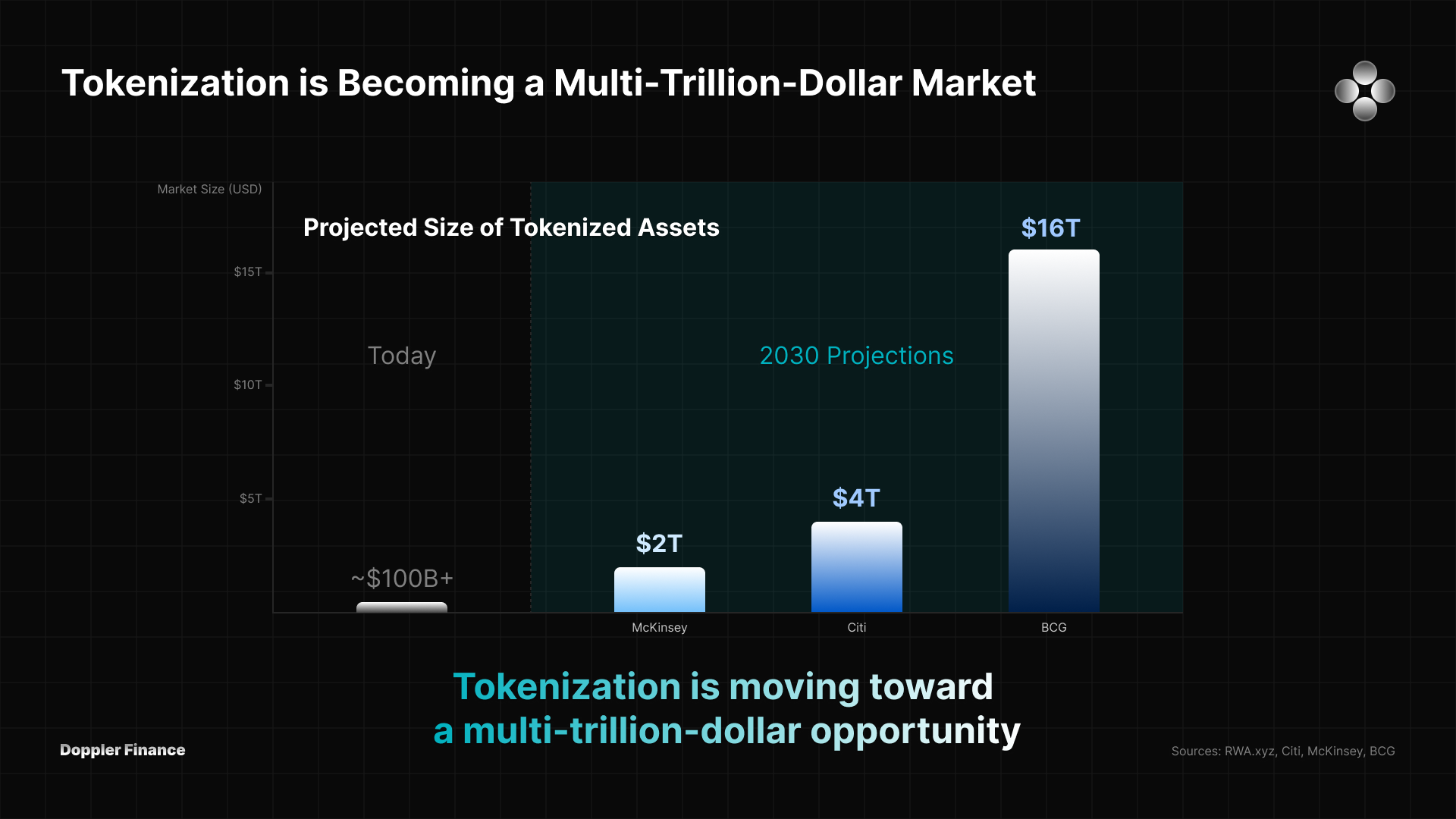
According to RWA.xyz, tokenized real-world assets now represent tens of billions of dollars in onchain value. When stablecoins and broader digitally represented assets are included, the tokenized asset landscape already reaches into the hundreds of billions.
This remains small relative to global capital markets. But the direction of travel is clear.
Major financial institutions and research firms increasingly view tokenization as one of the most significant structural shifts in financial market infrastructure. Citi has projected that tokenized financial and real-world assets could reach nearly $4 trillion by 2030. McKinsey has estimated tokenized market capitalization could reach approximately $2 trillion, with more optimistic scenarios reaching around $4 trillion. BCG has suggested tokenized illiquid assets could reach as much as $16 trillion by the end of the decade.
The precise numbers may vary.
The conclusion does not.
Tokenization is moving toward a multi-trillion-dollar market opportunity.
As this market expands, the central question will no longer be whether assets can be tokenized.
The question will be whether tokenized assets can operate within liquid, transparent, efficient, and institutionally reliable markets.
The Infrastructure Gap
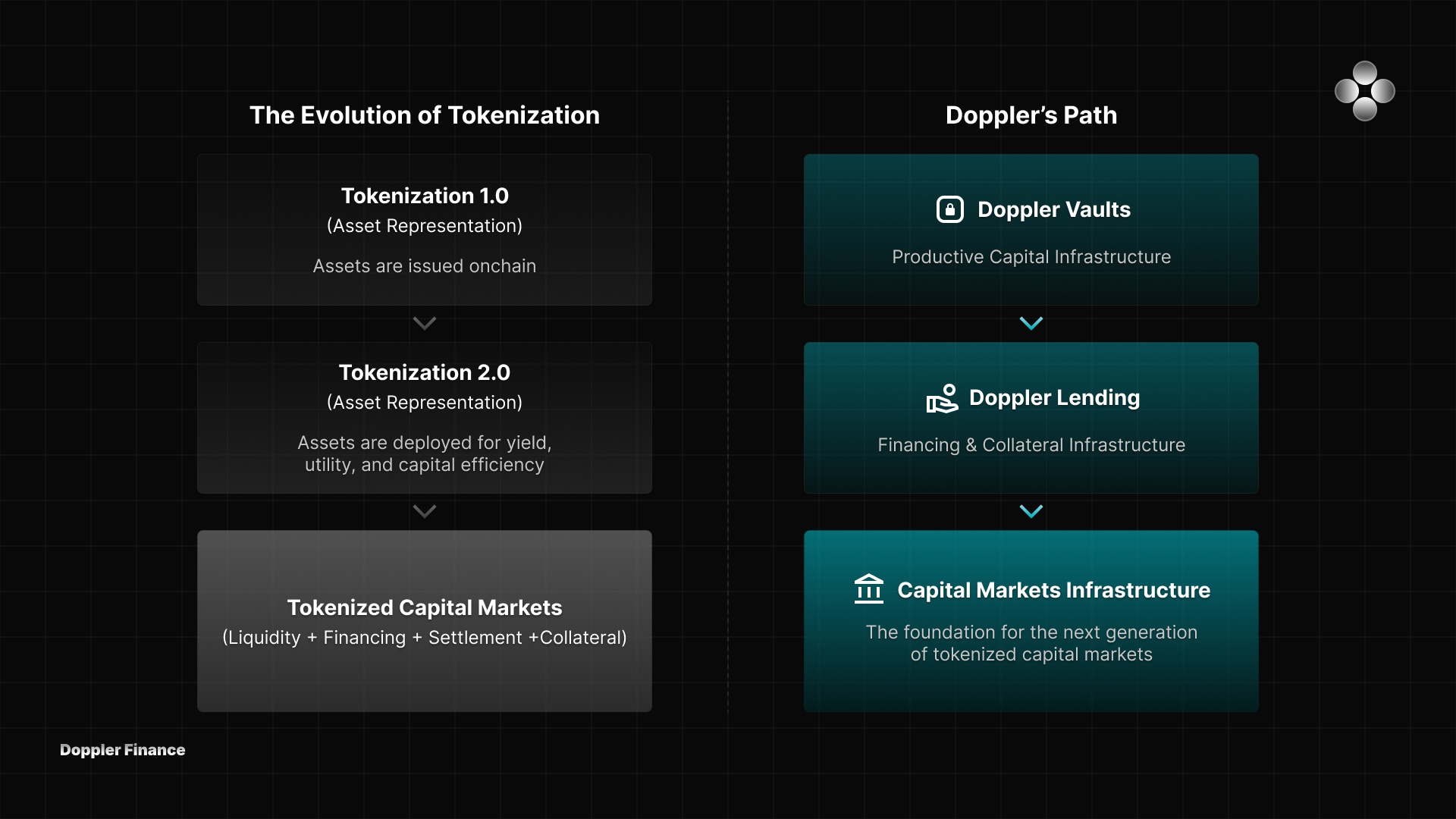
The first generation of tokenization focused primarily on asset representation.
Funds, treasuries, credit products, commodities, real estate, stablecoins, and other financial instruments can now exist onchain.
But representing an asset is not the same as creating a market around it.
Markets require liquidity.
Markets require capital efficiency.
Markets require collateral frameworks.
Markets require financing infrastructure.
Markets require settlement systems.
Markets require risk management.
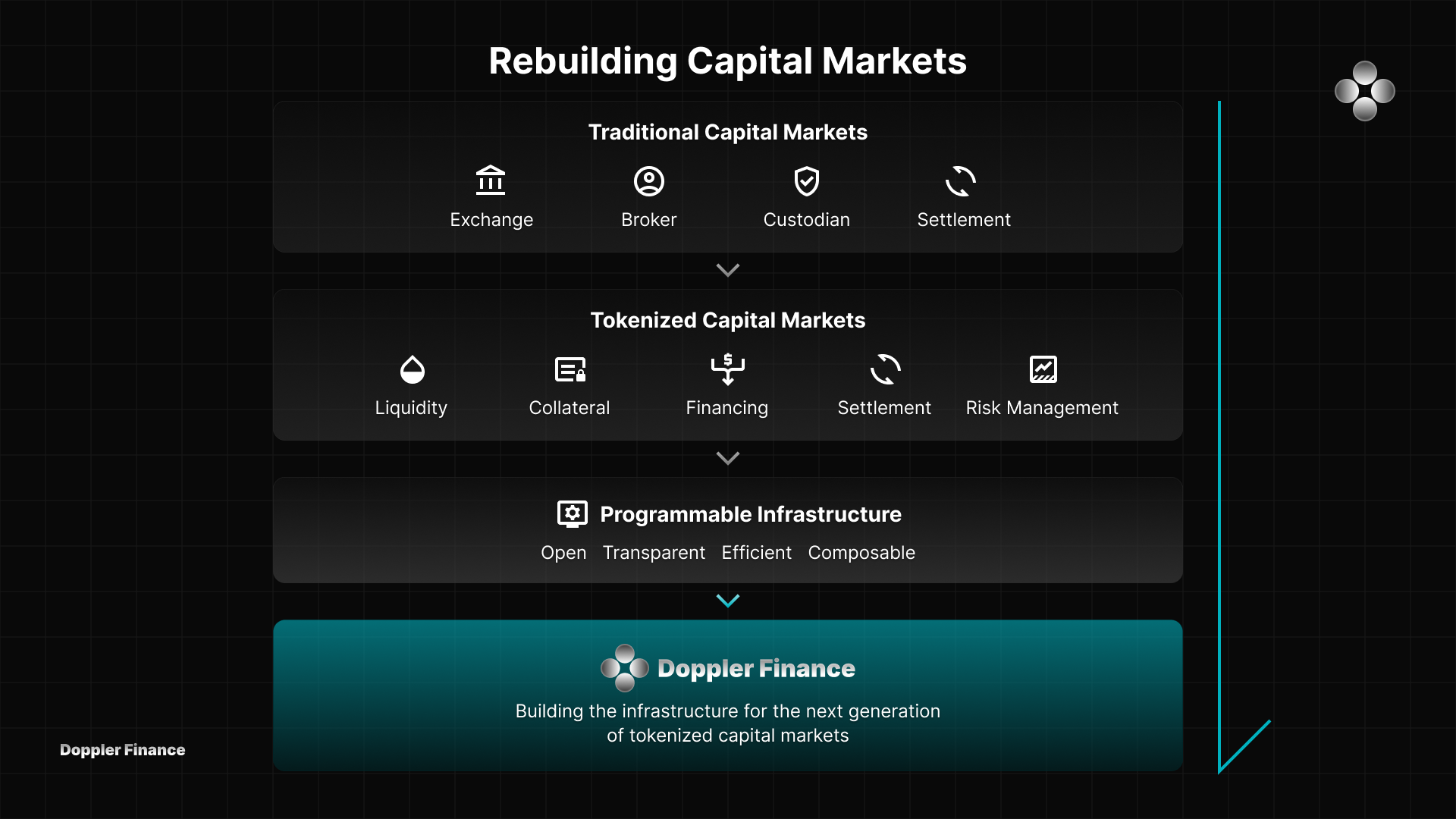
For decades, these functions have been supported by exchanges, custodians, brokers, clearing systems, settlement networks, and other market infrastructure providers.
As financial assets become increasingly tokenized, these functions must evolve as well.
Without the infrastructure that coordinates liquidity, capital, collateral, financing, settlement, and risk, tokenized assets remain representations rather than fully functioning markets.
The next phase of tokenization will therefore be defined not by asset creation, but by market infrastructure.
Doppler’s Starting Point
Doppler’s journey began within the XRP ecosystem.
There, we observed a growing demand for productive capital infrastructure as digital asset adoption accelerated and institutional participation expanded.
This led to the launch of Doppler Vaults.
What began as an effort to make digital assets more productive evolved into one of the largest yield infrastructure platforms within the XRP ecosystem, with more than $100 million in assets deposited.
The growth of Doppler Vaults validated a broader thesis.
The market does not simply need tokenized assets.
It needs infrastructure that allows capital to move more efficiently, collateral to be utilized more effectively, and participation to occur with greater transparency and confidence.
But the challenges we observed were not unique to XRP.
As tokenized markets mature, institutions increasingly require efficient mechanisms for capital deployment, collateral utilization, liquidity access, financing, and settlement.
These requirements emerge regardless of the underlying asset.
They are not ecosystem challenges.
They are capital market challenges.
Building the Infrastructure Layer for Tokenized Markets
This is where Doppler is focused.
Our vision extends beyond individual assets, blockchains, or market segments.
We believe tokenized markets will require a new infrastructure layer capable of supporting capital deployment, liquidity coordination, collateral efficiency, financing, settlement, and risk-aware market operations.
Early adoption has already demonstrated clear demand for productive capital infrastructure.
The next phase is broader.
Doppler Vaults were designed to help transform idle digital assets into productive capital through transparent and structured deployment frameworks. As tokenized markets continue to expand, Doppler Vaults will evolve to support a broader range of tokenized assets and capital formation opportunities across digital financial markets.
But productive capital is only one component of a functioning market.
Efficient markets also require financing, collateral mobility, liquidity access, and credit infrastructure.
This is one of the motivations behind Doppler Lending.
Doppler Lending is being developed as an institutional lending and financing layer for tokenized capital markets, leveraging emerging infrastructure such as XRP Ledger’s native lending framework, XLS-66d.
The objective is to enable tokenized assets to be utilized more efficiently across collateralized lending, borrowing, financing, and liquidity access while maintaining clear risk controls across custody, collateral management, execution, and reporting.
Over time, the platform may expand to incorporate broader financing capabilities, including collateral financing, structured liquidity access, and selected prime brokerage-style capabilities.
Together, Doppler Vaults and Doppler Lending address two foundational requirements of tokenized capital markets: productive capital deployment and financing infrastructure.
These represent the early layers of a broader infrastructure stack designed to support capital formation, liquidity, collateral utilization, and financing across tokenized markets.
Future infrastructure layers may further expand how tokenized assets are financed, utilized, and coordinated across digital financial markets.
This progression reflects Doppler’s long-term vision: building the infrastructure required for tokenized capital markets to operate at institutional scale.
The objective is not simply to bring existing financial products onchain.
The objective is to help build the infrastructure layer that allows tokenized markets to function more efficiently than the systems that came before them.
Rebuilding Capital Markets for the Tokenized Era
Institutional adoption depends on infrastructure.
A multi-trillion-dollar tokenized market will require more than asset issuance platforms.
It will require liquidity systems, collateral frameworks, financing infrastructure, settlement layers, reporting standards, and risk-aware execution environments.
Institutions require more than access.
They require reliability, transparency, control, reporting, and clear market structure.
They need infrastructure capable of combining the efficiency of programmable finance with the operational standards of global capital markets.
Tokenized markets must therefore be designed around more than openness.
They must support risk controls, execution integrity, settlement reliability, and auditable market activity.
Capital markets are not merely collections of assets.
They are systems for capital formation, liquidity, risk transfer, financing, settlement, and trust.
As these systems become increasingly programmable, the infrastructure beneath them must evolve as well.
The opportunity created by tokenization is measured in trillions of dollars.
But the larger opportunity is structural.
Tokenization changes the format of financial assets.
The next challenge is building the infrastructure that allows those assets to function as real markets.
We believe the next generation of tokenized capital markets will require a new infrastructure layer.
Doppler is building toward that future.