
The Rise of Institutional Lending for Digital Assets

Institutional Lending Is Becoming a New Financial Market
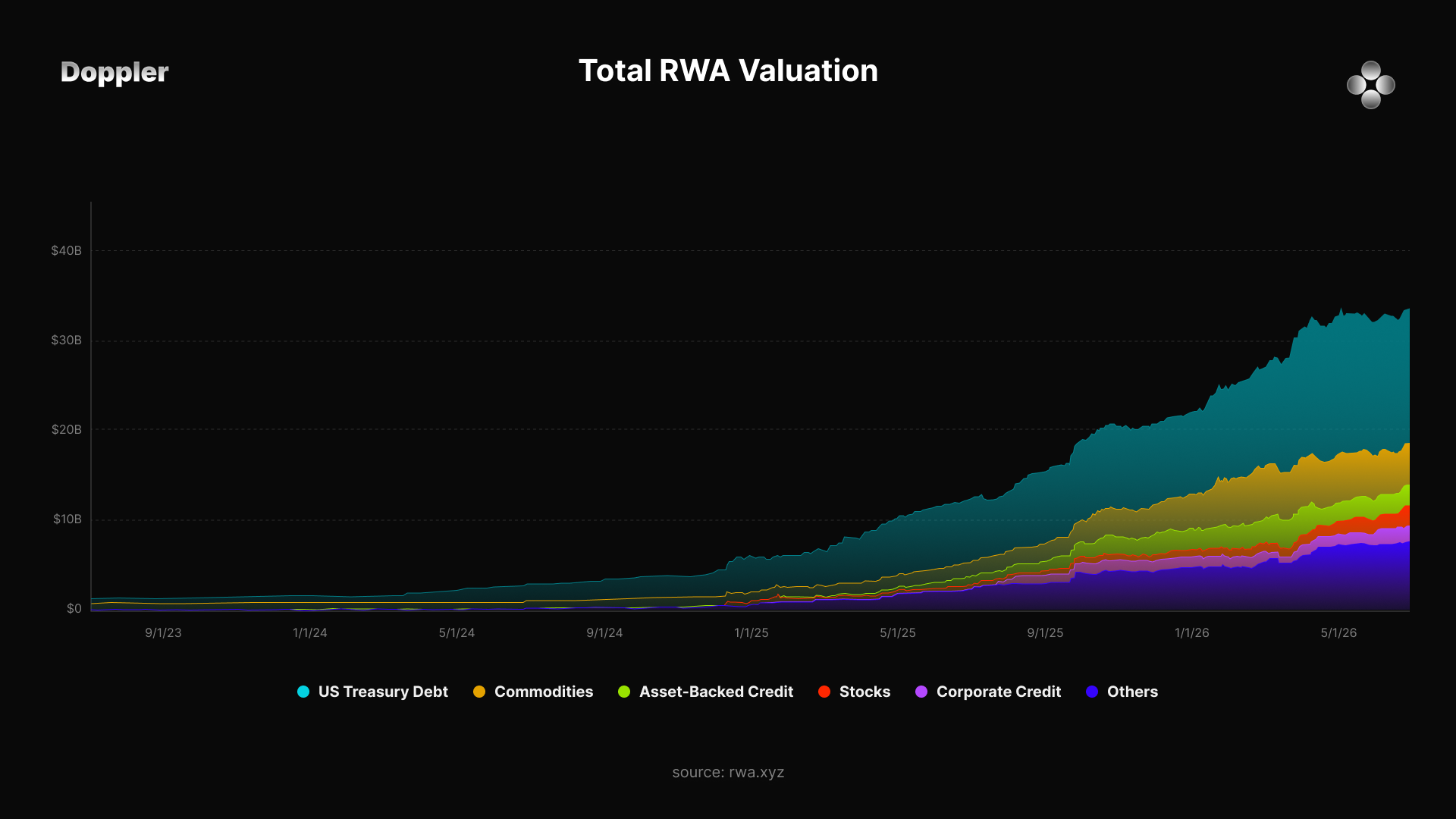
Over the past several years, institutional adoption of digital assets has expanded well beyond trading activity.
Public companies are incorporating digital assets into corporate treasury strategies. Asset managers are launching tokenized investment products across money market funds, private credit, and U.S. Treasuries. Stablecoins have evolved into an important settlement layer for digital finance, while tokenized real-world assets continue to grow as institutions become more comfortable operating on blockchain infrastructure.
The scale of this transition is becoming increasingly visible.
According to RWA.xyz, tokenized real-world assets now exceed $33 billion, while tokenized U.S. Treasury products have surpassed $14 billion. McKinsey estimates that tokenized financial assets could reach approximately $2 trillion by 2030 under its base-case scenario, reflecting the growing role of blockchain infrastructure within institutional finance.
As these markets expand, a new financing market is beginning to emerge alongside them.
Historically, every major financial asset class has developed its own lending market. Government bonds support repo markets. Equities support securities lending. Private credit has become an important financing channel outside traditional banking. Financial assets do not simply exist as investment products—they become increasingly useful when institutions can finance them efficiently.
Digital assets are beginning to follow the same progression.
As institutional ownership grows, financing becomes a natural extension of the market.
Institutional Lending Requires More Than Decentralized Finance
Although decentralized finance introduced new approaches to digital asset lending, institutional participants operate under fundamentally different requirements.
Financial institutions allocate capital through legal agreements, internal investment mandates, governance procedures, and regulatory obligations that extend far beyond the execution of a blockchain transaction. Every financing relationship requires clearly defined counterparties, transparent reporting, operational oversight, and risk management processes capable of supporting institutional decision-making.
The objective is not simply to originate loans onchain.
As discussed in our previous article on XLS-66(Read our previous article: Building Institutional Lending on XRP Ledger: The Role of XLS-66), native lending functionality represents an important foundation for institutional lending on the XRP Ledger. Institutions require far more than protocol-level lending capabilities alone. The objective is to establish financing environments that institutions can confidently integrate into their existing operating models.
This distinction becomes increasingly important as digital assets move from speculative portfolios toward treasury management, institutional investment, and corporate balance sheets.
Institutional lending therefore depends not only on blockchain infrastructure, but also on operational frameworks capable of supporting compliance, governance, commercial agreements, and ongoing credit oversight.
Custody Is Becoming Part of Lending Infrastructure
One of the most significant developments within institutional digital asset markets has been the evolution of custody.
Rather than transferring assets into unfamiliar operational environments, institutions increasingly expect financing infrastructure to integrate with custody solutions they already use to safeguard corporate assets.
Modern institutional custody platforms such as Fireblocks and Ceffu have demonstrated that digital assets can remain under institutional governance while supporting policy-based approvals, multi-party computation (MPC), role-based authorization, and operational controls that satisfy internal security requirements.
For institutional participants, custody is no longer a separate consideration from lending.
It has become part of the lending infrastructure itself.
Maintaining operational control over assets while enabling financing activity represents an increasingly important requirement as digital asset lending continues to mature.
Infrastructure Must Reflect Institutional Workflows
Institutional lending cannot assume that every participant operates under the same financing model.
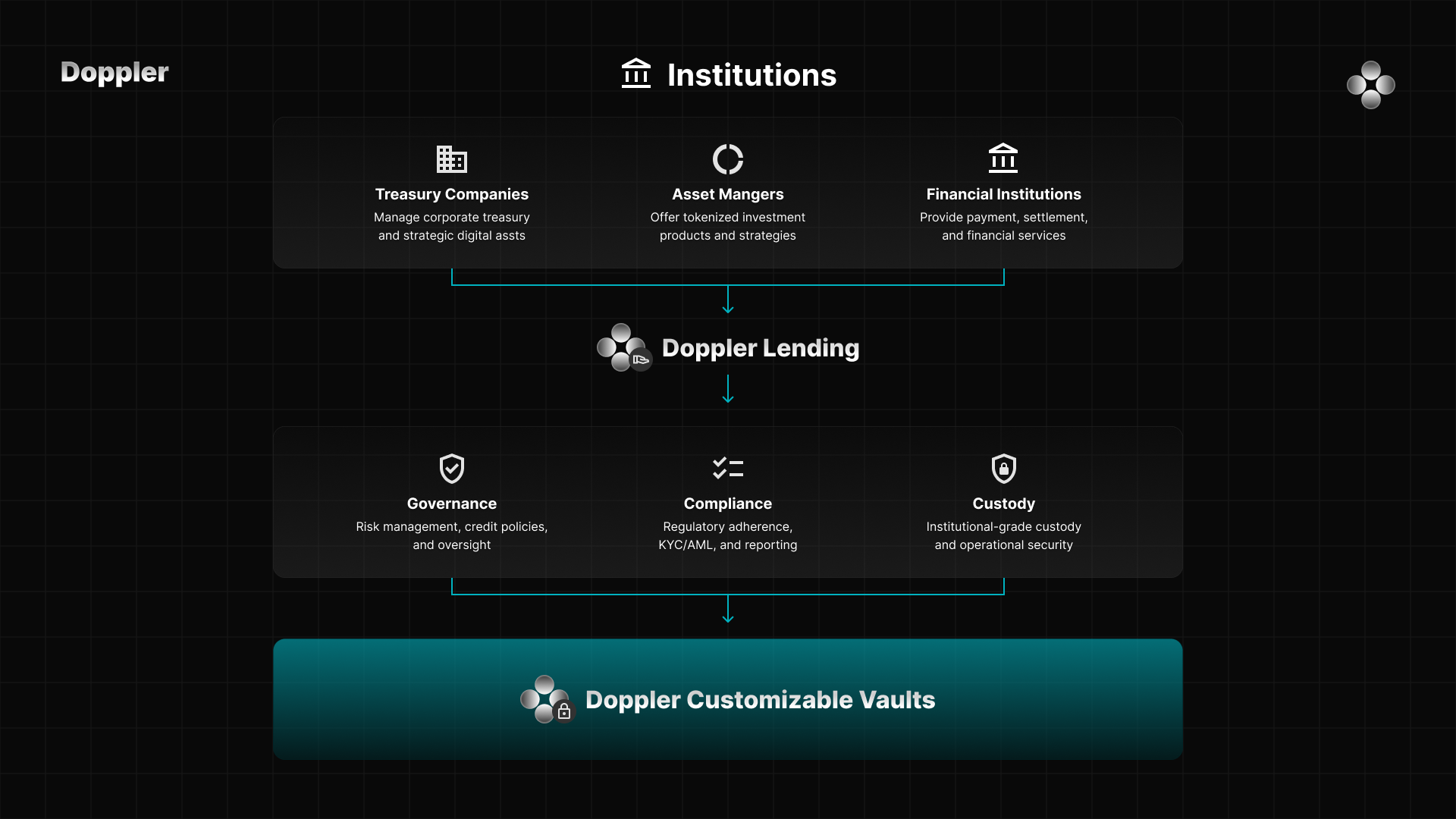
Treasury companies manage liquidity differently from asset managers. Payment institutions prioritize operational capital differently from investment firms. Regulatory obligations, reporting requirements, financing horizons, borrower mandates, and governance frameworks all vary across institutions.
As a result, institutional infrastructure must provide flexibility without sacrificing operational consistency.
This philosophy has shaped Doppler’s approach to institutional lending.
Rather than developing standardized lending pools, Doppler is building customizable vault infrastructure that allows financing environments to reflect the operational requirements of different institutional participants.
Institutions can structure lending environments around their own liquidity policies, governance standards, reporting frameworks, borrower mandates, and operational controls, allowing blockchain-based lending to fit naturally within existing institutional workflows rather than requiring institutions to redesign them.
Building the Institutional Ecosystem
Infrastructure alone does not create institutional lending markets.
Sustainable lending requires trusted custody providers, established financial institutions, qualified borrowers, technology partners, and distribution networks capable of supporting long-term capital formation.
Doppler has focused on building this broader ecosystem alongside its technology.
Its integration with Fireblocks and Ceffu strengthens institutional custody capabilities while maintaining operational security. Strategic collaboration with SBI Ripple Asia expands institutional access within one of the world’s largest XRP ecosystems, while initiatives with partners such as Evernorth demonstrate how digital asset financing is beginning to support institutional treasury strategies beyond the traditional crypto industry.
Each partnership contributes a different component of the institutional lending ecosystem, helping establish the operational foundation required for digital asset financing to continue maturing.
Related announcements
• Doppler Finance × SBI Ripple Asia:

https://blog.doppler.finance/blog/sbi-ripple-asia-partners-with-doppler-finance-for-xrp-yield-and-rwa-tokenization
• Doppler Finance × Evernorth:

https://blog.doppler.finance/blog/evernorth-and-doppler-finance-collaborate-to-power-institutional-xrp-infrastructure
New Phase of Institutional Adoption
Institutional adoption of digital assets is entering a new phase.
The next stage of market development will not be defined solely by how many assets become tokenized, but by whether those assets can participate in efficient financing markets.
Native protocol developments such as XLS-66 have the potential to establish the foundation for institutional lending on the XRP Ledger. Real-world adoption, however, will depend on infrastructure that extends beyond protocol functionality to include custody integration, governance, compliance, and operational flexibility.
Doppler’s focus is to bridge these two layers. By combining customizable lending infrastructure with institutional custody providers and strategic financial partners, Doppler is building the framework required for digital assets and tokenized financial products to participate in institutional credit markets at scale.