Building the Financial Operating Layer for Tokenized Assets

Executive Summary
Doppler is building a financial operating layer for tokenized assets: infrastructure that lets crypto and tokenized assets be used for yield, lending, credit and other financial activities onchain, with the security, transparency and operational standards that institutional participants require.
Doppler Vaults launched in February 2025 because XRP holders had no way to earn on XRP without selling it or lending it out through an intermediary. The vaults run asset-neutral strategies through institutional custody and off-exchange settlement and pay yield in the deposited asset. Since launch, more than 14,000 depositors have placed over $150M into XRP and RLUSD vaults on XRPL and Ethereum. The same infrastructure now runs as Earn products inside Bybit and Bitget Wallet, and as dedicated institutional vaults underpinning relationships with SBI Ripple Asia, SBI Digital Finance and Evernorth.
The next phase extends that base in five areas: more assets and networks, starting with cbXRP on Base and Canton; a wider set of strategies and managers, starting with managed vaults; compliance and monitoring built into the product rather than run as process; lending and credit on the XRP Ledger's native Lending Protocol (XLS-66); and tokenized representation of the positions that result. Together, they take Doppler from a yield product for XRP to a financial operating layer for tokenized assets.
Our Vision
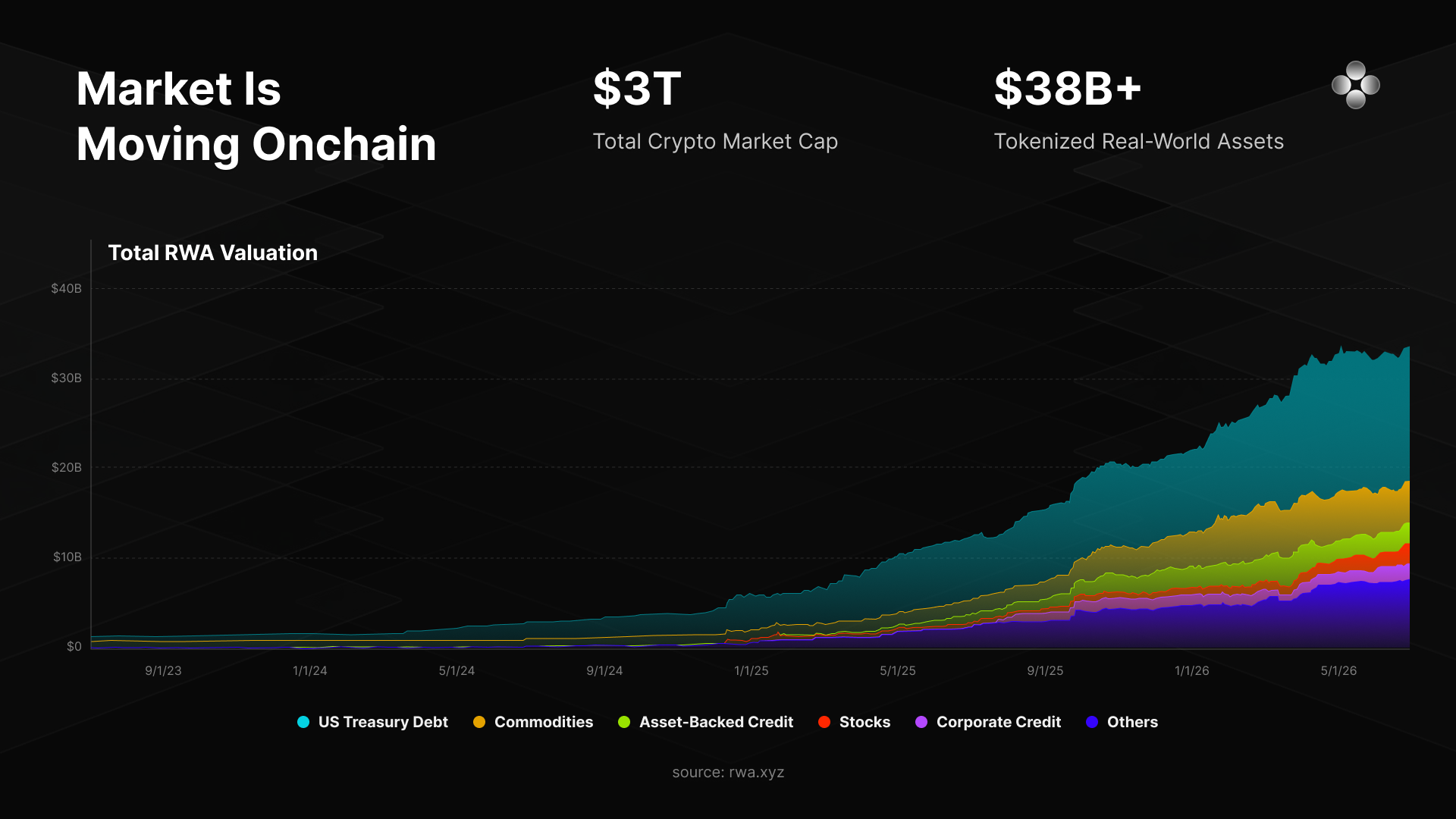
Crypto markets are growing, and more traditional financial assets such as stocks, treasuries, and funds are moving onchain through tokenization. Digital assets now represent approximately $3 trillion in market capitalization. In parallel, more than $38 billion of real-world assets have been brought onchain, including Treasuries, credit, equities, and commodities.
But putting an asset onchain is not enough.
For these assets to be useful in financial markets, they need to support activities that already exist in traditional finance. This includes yield, collateralized lending, unsecured lending, credit, and other forms of financing.
The infrastructure for these activities is still fragmented.
For institutions, the challenge is even greater. They need to consider counterparty risk, custody, compliance, operational security, and ongoing monitoring before they can deploy capital onchain. This is the gap Doppler was built for.
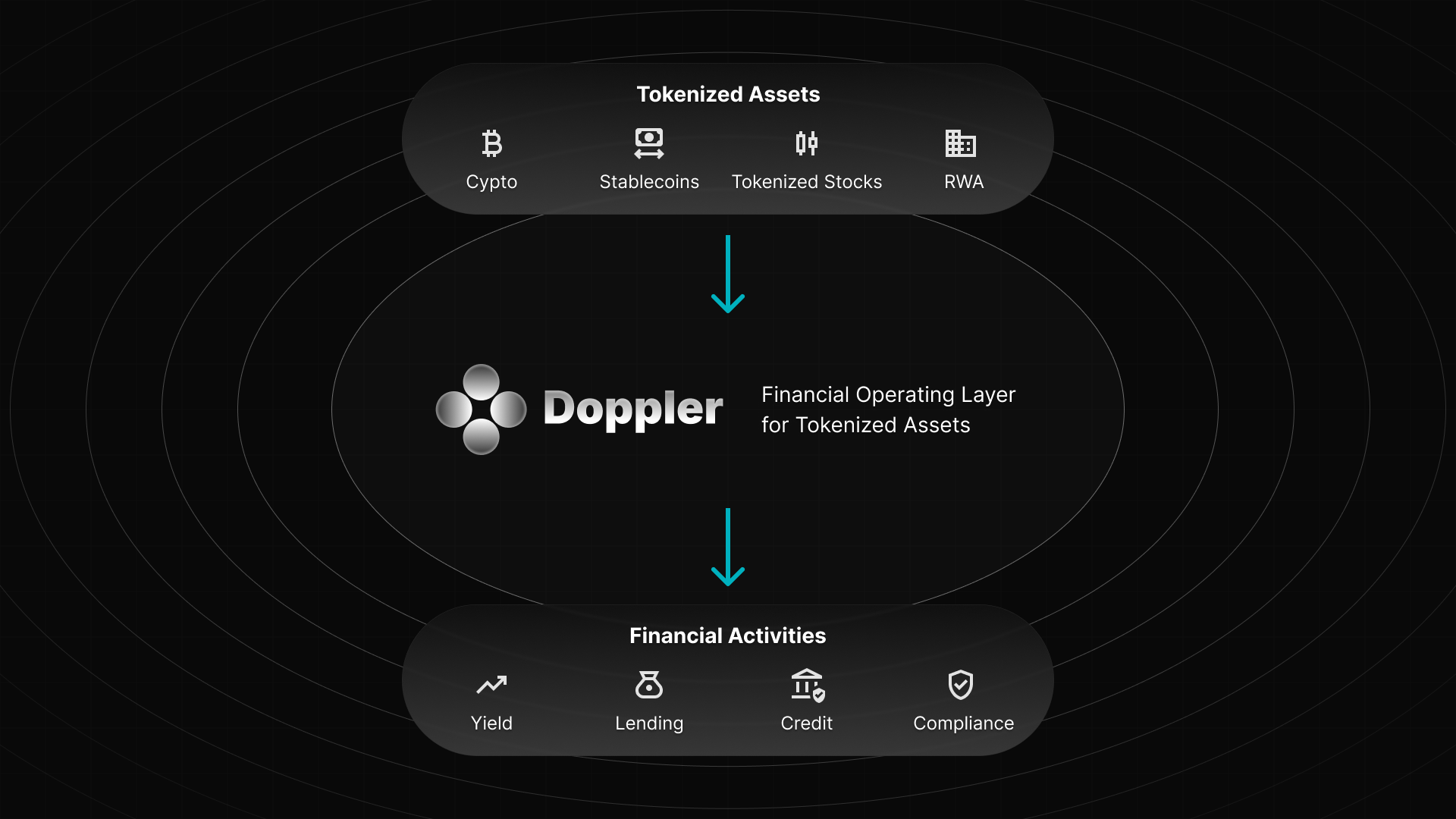
Our goal is to build a financial operating layer for tokenized assets.
This means creating infrastructure that allows tokenized assets to be used for yield, lending, credit, and other financial activities onchain, while providing the security, transparency, and operational standards required by institutional participants.
As more assets move onchain, the next step is to make those assets financially usable.
Doppler Today
CeDeFi Yield Infrastructure
XRP has no staking mechanism, and the XRP Ledger has had no native yield primitive and no smart contract support. Doppler Vaults were built to provide yield for XRP and RLUSD through a CeDeFi structure: assets are held under institutional custody, deployed into asset-neutral strategies through off-exchange settlement, and yield is paid in the deposited asset. Since launching in February 2025, more than 14,000 depositors have placed over $150M into the XRP and RLUSD vaults.
Strategies are asset-neutral and designed to accumulate units of the deposited asset rather than dollar value. The two main strategies are:
- Asset-neutral arbitrage. Capital is deployed across venues to capture pricing discrepancies in spot and perpetual markets, structured so that positions net more of the asset rather than more dollars.
- Spot-perpetual basis. Asset-neutral positions across spot and perpetual markets capture funding-rate differentials while keeping market exposure low, with deposited assets serving as collateral at conservative loan-to-value ratios under continuous monitoring.
Institutional Security and Transparency
Doppler's architecture is designed to minimize third-party risk through institutional-grade custody and off-exchange settlement, while keeping deployed capital verifiable at every stage.
- Institutional-grade custody. Deposits are secured through institutional-grade custody infrastructure like Fireblocks and Ceffu, with transfers requiring multi-signature approval.
- Off-exchange settlement. Trading capital is deployed to exchanges through OES, so strategies execute on exchange order books without asset ownership transferring to the exchange. Direct exposure to exchange counterparty risk is minimized as a result.
- Proof of reserves. Doppler provides proof of reserves for vault assets, allowing users and partners to verify the assets backing the vaults. Transparency reports have also been published quarterly since Q4 2025.
For institutional vaults, this is complemented by a real-time transparency dashboard that consolidates off-chain trading data and custody balances into a single continuous view of asset status and strategy performance.
Products and Distribution
Doppler's infrastructure is delivered as three vault products, each reaching a different depositor base.
Doppler Vaults (direct). Public XRP and RLUSD vaults on XRPL, with the RLUSD vault also live on Ethereum, accessed through the Doppler app. Open to any holder, with no platform fees on deposits or withdrawals.
Earn Integrations. Doppler's vaults offered inside partner exchanges and wallets as an Earn product, so partners can provide XRP and RLUSD yield to their own users without building the infrastructure themselves.
- Exchange-native. Deposits are taken on the exchange and yield is credited there, so user assets do not leave the platform. Bybit XRP Earn has run on this model since April 2026.
- Wallet-integrated. Deposits are routed from the partner's interface directly into Doppler vaults. Bitget Wallet's RLUSD Earn launched on this model and was fully subscribed within three days.
Institutional Vaults. Dedicated vaults for institutions, with per-institution wallets under the institution's own key control and custody and strategy structures configured to each partner's compliance requirements. Doppler's institutional relationships are built on this structure.
- SBI Ripple Asia: XRP-based yield infrastructure and RWA tokenization on XRPL, with SBI Digital Markets as institutional custodian (December 2025)
- SBI Digital Finance: institutional XRP finance in Japan (July 2026)
- Evernorth: exploring institutional liquidity and treasury use cases on XRPL (January 2026)
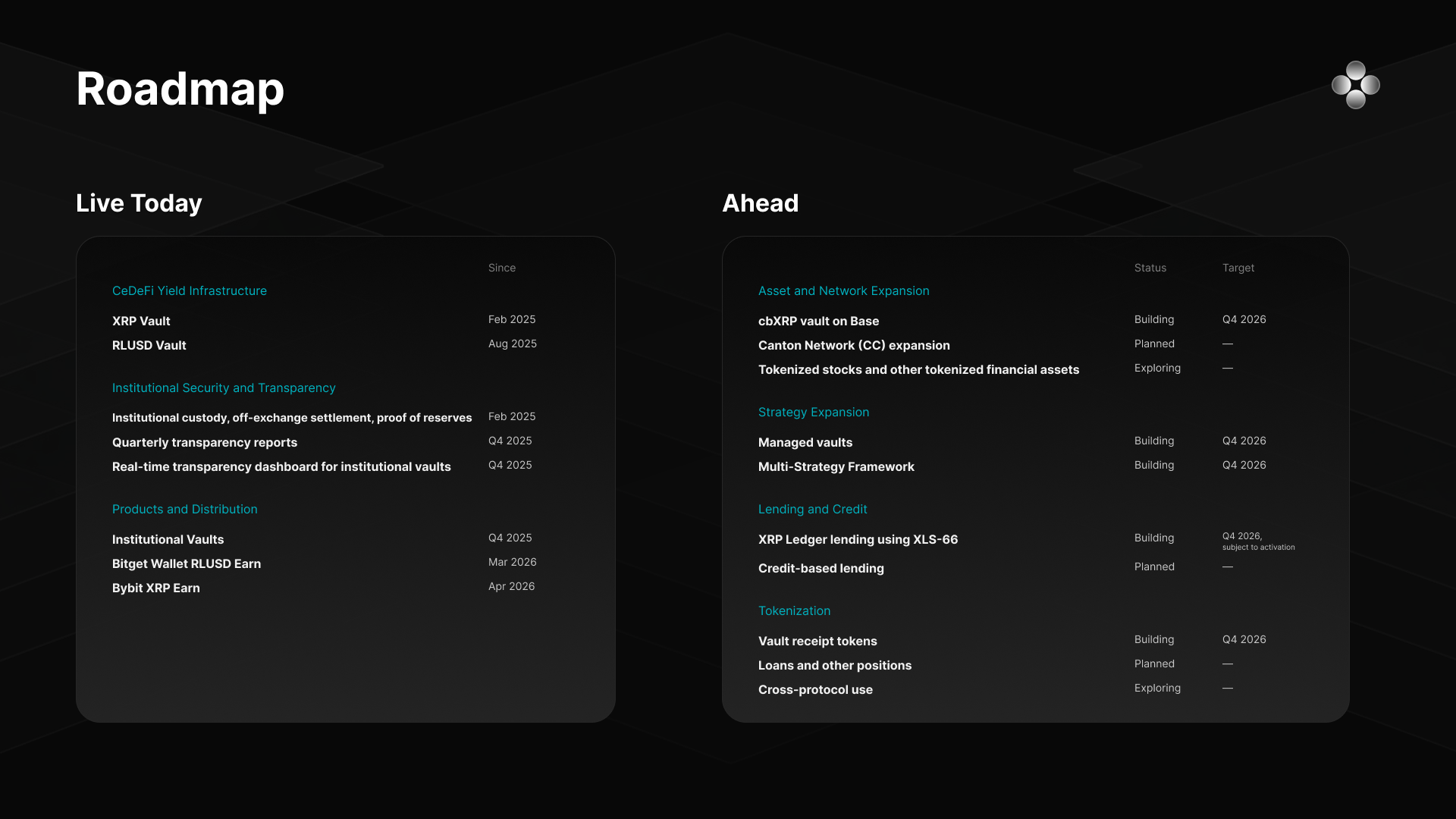
What We’re Building Next
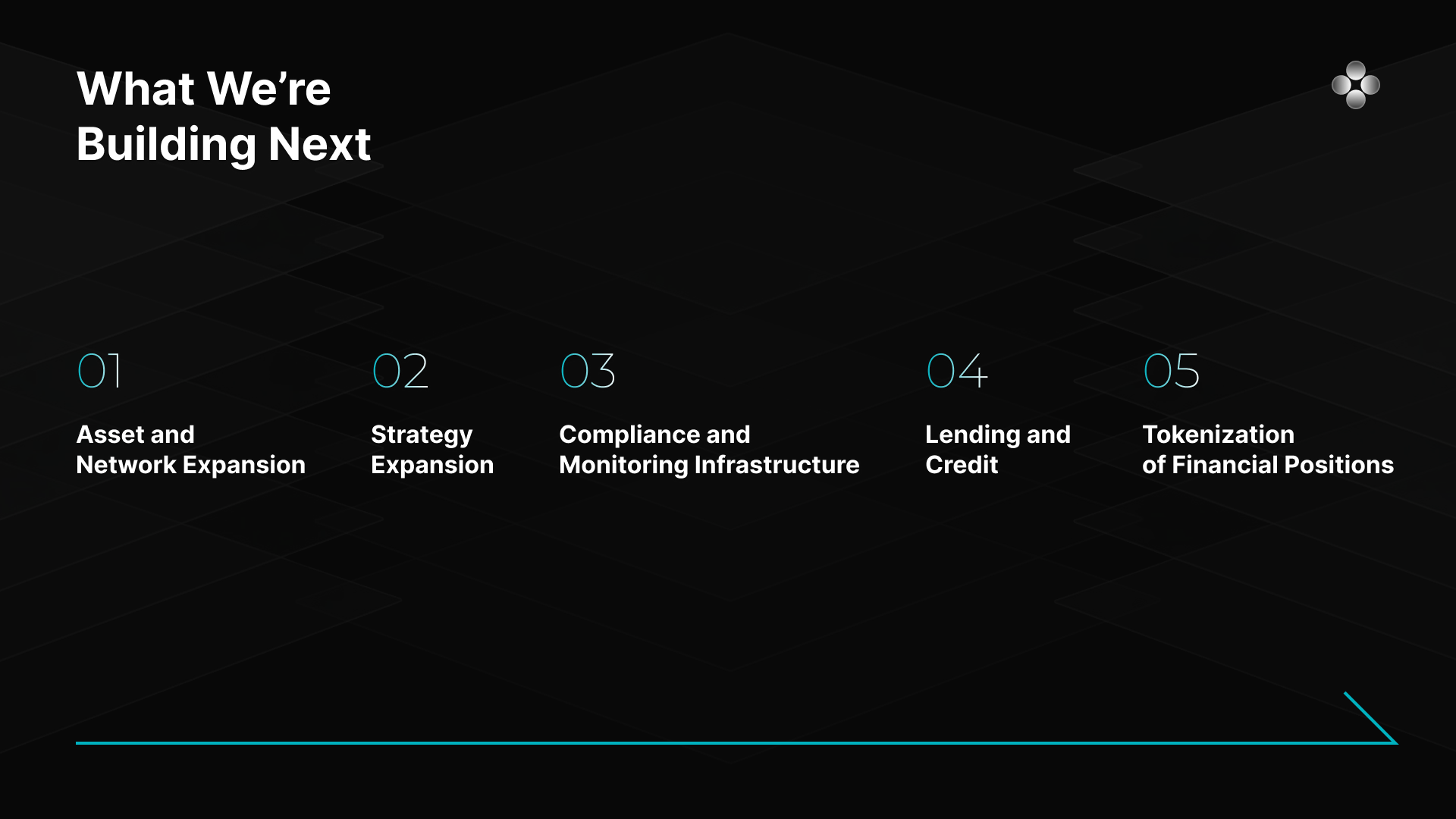
1. Asset and Network Expansion
Doppler started with XRP and RLUSD. We are expanding the same infrastructure to support a broader range of crypto and tokenized financial assets across multiple networks.
Expansion runs in two directions. On the asset side, from XRP and RLUSD to other major crypto assets and, further out, to tokenized financial assets. On the network side, from XRPL and Ethereum to the networks where those assets and their liquidity actually sit, including networks built specifically for institutional finance.
- [Building – Q4 2026] cbXRP on Base. Following our expansion to Base, Doppler is starting with Coinbase Wrapped XRP (cbXRP) and extending to additional tokenized assets over time.
- [Planned] Canton Network. Doppler is bringing its vault infrastructure to Canton, a network built for institutional finance, starting with Canton Coin (CC). This extends the same custody-first structure to an ecosystem where institutional assets are already issued and settled.
- [Exploring] Tokenized stocks and other tokenized financial assets. Support will follow as these assets reach institutional custody and liquidity standards.
2. Strategy Expansion
The strategy framework is being expanded in two directions.
First, institutional trading firms will be able to operate dedicated vaults using Doppler's custody and settlement infrastructure, allowing different managers to offer strategies with their own liquidity terms and risk profiles.
Second, the range of return sources will expand beyond trading strategies to include short-duration fixed income, tokenized Treasuries and money market funds, secured lending, and private credit.
These strategies will be supported within a multi-strategy framework, with capital allocated based on defined liquidity, duration, counterparty, and risk parameters.
- [Building] Managed vaults. Dedicated vaults run by institutional trading firms on Doppler's infrastructure, each with its own strategy, liquidity terms and risk profile, so depositors choose the manager as well as the asset.
- [Building] Multi-Strategy Framework. Doppler plans to expand beyond trading-based strategies by supporting a broader set of return sources, including short-duration fixed income, tokenized Treasuries and money market funds, secured lending, and private credit. Capital can be allocated across these strategies based on liquidity, duration, counterparty exposure, and risk parameters rather than relying on a single source of return.
3. Compliance and Monitoring Infrastructure
As Doppler expands into more assets and financial activities, compliance and monitoring need to become part of the product infrastructure itself.
- Regulated counterparties. Doppler will continue to work with licensed financial institutions and regulated counterparties so that yield, lending, custody, and other financial activities can be conducted within applicable regulatory frameworks.
- Direct licensing. Doppler intends to obtain licenses directly where specific activities or jurisdictions require them.
- Rule-based compliance. Access and strategy eligibility will be managed based on factors such as jurisdiction, investor type, asset type, and applicable regulatory requirements.
- Infrastructure-level controls. Compliance and monitoring will increasingly be embedded into the product rather than handled as separate manual processes, including systems for monitoring activity and enforcing applicable restrictions.
4. Lending and Credit
Lending and credit come next. Doppler is building infrastructure that allows crypto and tokenized assets to be used across both collateralized lending and institutional credit markets.
On the XRP Ledger, this expansion is being built around XLS-66, which introduces native lending functionality at the protocol level. Doppler Lending is being developed on top of this infrastructure to support loan origination, collateral management, repayment, liquidation, counterparty monitoring, and credit exposure management, with lending activity recorded natively on XRPL.
Doppler Lending is separate from the lending-based strategies used within Doppler Vaults. Doppler Lending is an infrastructure for borrowers and capital providers. The lending strategies inside the vaults are one of several ways the vaults generate returns.
- [Building – Q4 2026, subject to XLS-66 mainnet activation] XRP Ledger lending using XLS-66. Collateralized lending with the full loan lifecycle handled through Doppler's infrastructure.
- [Planned] Credit-based lending for qualified institutional counterparties.
5. Tokenization of Financial Positions
Today, a deposit into a Doppler vault is recorded only on Doppler's side. The depositor can see the balance in the app, but cannot move it to another wallet, pledge it as collateral, or use it in another protocol. Once Doppler Lending is live, the same will be true of loans.
This area turns those positions into onchain assets. Vault shares, loans, credit exposures and fund interests will be issued as tokens, so they can be held, transferred, used as collateral and settled onchain, including in protocols outside Doppler. Vault positions come first, followed by loans and other positions as Doppler Lending launches.
- [Building] Vault receipt tokens. Transferable tokens for vault positions on EVM networks, with request-then-claim redemption. The first onchain form of a Doppler position, and the base on which managed vaults are built.
- [Planned] Other financial positions. The same structure extended to loans, credit exposures and fund interests, issued, tracked, transferred and settled through Doppler's infrastructure, with eligibility enforced by the same compliance layer that governs vaults and strategies.
- [Exploring] Cross-protocol use. Tokenized Doppler positions accepted as collateral or a liquidity source in other protocols and financial applications.
Roadmap